Although we live in the most connected era in history, research indicates a decline in social skills, rising loneliness, and ebbing interpersonal skills among young people. Harvard and EU studies point to an overall decline in social skills. As European educators focus on skill training, the pressing need to promote social skills, core to all other competencies, has never been greater. While promoting digital skills must be a priority, people will always struggle in all areas of life without social competencies and intelligence. This article examines issues surrounding social skills in education, business, and beyond.
The Latest Research on Social Skills
A 2023 OECD study of social and emotional skills among teens and teenagers uncovered a significant decline since 2019 in the Finnish and Colombian cohorts participating in both studies.
In total, groups of 10-15-year-old boys and girls from 6 countries participated, with two countries, Finland and Colombia, having also participated in the previous study. Researchers selected the following social skills for the purpose of their research project:
Ability to perform tasks: self-discipline, motivation, tenacity, responsibility
- Emotional regulation skills: optimism, emotional mastery, and stress resistance
- Social and engagement skills: energy, assertiveness, and sociability
- Ability to be open-minded: tolerance, curiosity, and creativity
- Collaboration skills: trust and empathy
The findings revealed several shortfalls in social skills, some of which were associated with gender or socio-economic background. Indicators of ambition and drive among the participants were equally strong.
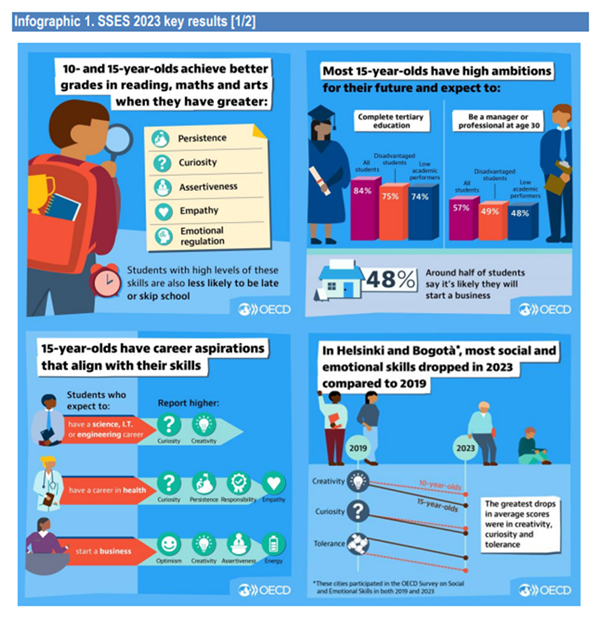
The dwindling of most social and emotional skills across both age groups and locations between 2019 and 2023 may point to a trend present in the workplace, too.
Post-pandemic, many people continued to work remotely, enjoying reduced commuting times, quieter workplaces, and more flexibility. But a backlash from employers soon followed. They cited reduced profitability, hampered teamwork, and waning employee engagement among the reasons. Some went so far as to ban remote work altogether. Research conducted in late 2024 by Resume Builder points to the social impact of remote work.
Most employees participating in the study confessed to no longer feeling connected to their colleagues. Making small talk and maintaining eye contact without feeling self-conscious is now a struggle for many. With 70 per cent of workers never working in social settings outside their homes, few opportunities for day-to-day social contact remain. Twenty per cent of employees conceded that they were experiencing a decline in mental wellness as a result of isolation.
Examples of Social Skills Education
In many countries, social skills education already exists. Social, Personal, and Health Education (SPHE) is a subject in Irish secondary schools, conceptualised with social and emotional learning and skills in mind. Teachers know all too well how crucial social and emotional well-being is to learning. It stands to reason to assume that a well-integrated, optimistic, sociable student completes academic tasks more effortlessly.
In response, professional development courses for teachers feature Social and Emotional learning at the heart, equipping educators to help students grow emotionally and socially.
Are Social Skills a Priority in Europe?
Addressing skills shortages is a top priority for the EU’s education policymakers. Digital skills, literacy, numeracy, cultural awareness, and language skills lie at the centre of thousands of European educational projects. Though listed as core skills and coined LifeComp (life competencies), social and emotional skills rarely feature as core course topics.
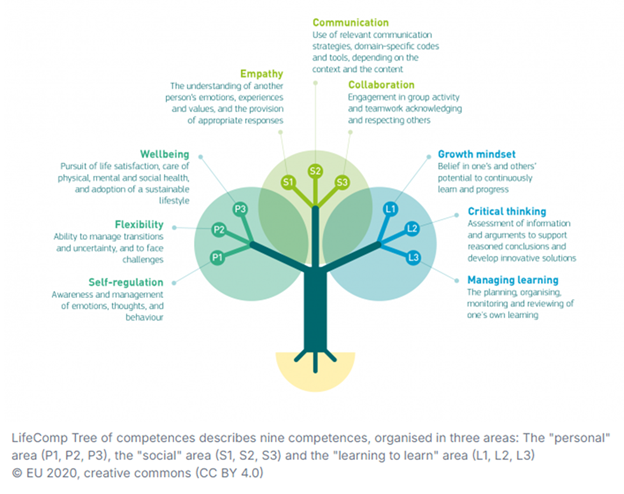
How Europe’s Educators Can Reprioritise Social Skills Training
The last few years have seen digital competencies, hybrid learning, and self-motivated learning rise to the top, often at the cost of social interaction and personal growth.
Schools and universities wishing to develop a cohesive, happy future society and workforce must reprioritise social skills training. Interactive learning, discussions, communication skill practice, and conflict resolution, as well as personal emotional health care, must feature in today’s curricula. Promoting in-person events, tasking students with interactive assignments, debates, and collaboration, promotes social skills growth among students.
Intentional Practice Tasks for Learners
Learners must take responsibility and ownership of their social skills practice and accept its utmost importance by committing to it. Educators can support them in this process by staging the above training tasks and encouraging learners to become active and intentional about their social skills practice:
- Seek out suitable settings such as clubs, networking circles, and societies
- Investing time in daily in-person exchanges
- Participate in collaborations and teamwork
- Obtain constructive feedback on social skills from peers
Social Skills - Evergreen and Future-Proof
According to a LinkedIn survey, 93% of employers say they would prioritise soft skills over technical skills when choosing job candidates. The World Economic Forum names “Leadership and Social Influence” among its top 10 sought-after skills of 2030.
While AI and technology will no doubt evolve rapidly over the next decade, social skills will remain the indispensable foundation. Only through meaningful interaction and communication can breakthroughs occur, requiring empathy, creative thinking, and solid human connections.
As industries grow and evolve, educators and governments must maintain soft skills training as their top priority, not only for thriving economies but also for the well-being of all individuals.